5 Effective Strategies for Teaching Music Theory to Non-Majors 

Carlos Maldonado
Entrepreneur and pioneer of the use of the Internet in education. Direct experience in designing, authoring, developing, publishing, and distributing world-class courses, training programs, and educational services used in hundreds of colleges and universities in the USA.

How to Make Teaching Music Theory Meaningful, Accessible, and Engaging for Every Student

Strategies for Teaching Music Theory
Teaching Music theory can be a powerful for understanding how music works—but for non-majors, it’s often an intimidating or abstract requirement. These students may be passionate listeners or casual performers, but they don’t always arrive with formal training or a deep desire to learn about chord progressions and counterpoint.
So how do we meet them where they are—without dumbing it down?

Here are five practical strategies for helping non-majors engage meaningfully with music theory, without losing academic integrity.

""
Start With Sound Before Symbols
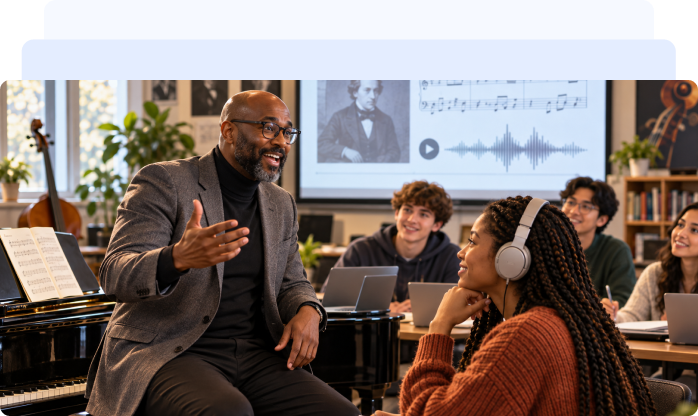
Rather than diving into notation and terminology, begin with listening. Invite students to explore patterns they hear in familiar music. Ask:

  • What do you notice about the bass line?
  • When does the harmony change?
  • How does tension build and resolve?
This encourages an aural-first approach that aligns with their lived experiences as music consumers.
""
Contextualize Theory in Real Music
Avoid endless drilling of theoretical abstractions without purpose. Instead, anchor each concept in real-world examples—especially from genres students already care about.

Teaching cadences? Show how they function in Beyoncé, Radiohead, and Mozart. Talking about chord functions? Analyze a pop song’s looped progression alongside a classical phrase. When students see how theory reveals musical meaning, they become curious rather than cautious.

""
Use Creative Assessments
Instead of (or alongside) traditional exams, try alternative assessments:

  • Compose a short piece using a specific progression.
  • Create a playlist that illustrates a theoretical concept.
  • Annotate a favorite song using newly learned vocabulary.

These formats give students ownership of the material—and often yield more authentic learning.
""
Leverage Technology for Visualization and Practice
Let’s face it: paper-based instruction limits how we experience music theory. Interactive tools and digital scores bring concepts to life. Students can:

  • See animated visualizations of voice leading
  • Hear intervals and chords in real time
  • Get immediate feedback on drills
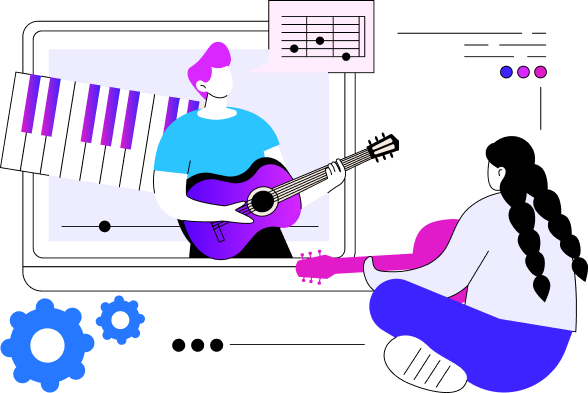
That’s why many educators are turning to online courseware like OnMusic Theory and OnMusic Fundamentals created by Connect For Education Inc. These digital textbooks combine high-quality audiovisual notation examples, auto-graded practice, intuitive listening tools, and the opportunity for self-assessment, not to mention mid-term and final exams —all in one accessible package.

For non-majors especially, this kind of immersive, tech-enabled learning environment makes theory feel less like math homework and more like music.
""
Keep Goals Clear (and Manage Expectations)
For music majors, theory is foundational. For non-majors, it's often elective or required for a general education credit. Align your course outcomes accordingly:

  • Focus on practical literacy and listening skills.
  • Prioritize musical fluency over rote memorization.
  • Invite personal reflection: “What’s something you’ve always wondered about music?” and tie that into the curriculum.
When students understand why they’re learning theory and how it applies to their musical lives, they’re far more likely to invest.
Final Thoughts
Teaching music theory to non-majors doesn’t have to mean lowering the bar—it just means shifting the focus. By emphasizing listening, relevance, creativity, and technology, we can help students build a deep and lasting relationship with music’s inner workings.

And with web-based interactive courses like OnMusic Theory and OnMusic Fundamentals, instructors can blend rigorous content with intuitive design, creating an engaging and equitable learning experience for all.

Ready to try an online theory coursebook that meets students where they are? Explore OnMusic Theory and other courseware at Connect For Education.

Instructor access is free, and reviewer accounts give teachers a 60-day window to explore courses and every feature before adoption.

Graphics
Top Blogs

C4E Scholarship Sparks 2 Fundraising Breakthroughs for ARC Music Students

March 10, 2026

How this C4E Scholarship Program Changed Everything When we began designing our online degree programs at American River College (ARC), we adopted several digital textbook…

Read More

Find Your Unique Sound: 5 Breakthrough Strategies Every Musician Needs

February 4, 2026

Find Your Unique Sound Find Your Unique Sound by exploring the creative choices, influences, and instincts that make your music unmistakably yours. Developing a signature…

Read More

Online Music Lessons That Actually Work: 5 Proven Ways Students Succeed

January 12, 2026

How Virtual Lessons Can Be More Effective Online music lessons have become more popular than ever-but not all online music lessons actually work. Many students…

Read More

Crush a Learning Plateau: 5 Game-Changing Ways Students & Musicians Break Through

January 6, 2026

Why Students & Musicians Experience a Learning Plateau Every musician hits a wall at some point – that frustrating moment when progress stalls, motivation dips,…

Read More

Choosing the Best Music School for Your Goals: 5 Brilliant Tips

December 10, 2025

Find the Music School that’s Right for YOU Choosing the best music school for your goals takes more than finding a program with a strong…

Read More

5 Reasons Why Online Music Lessons Work: Expert Mentorship for Every Level of Musician

November 25, 2025

Why Online Music Lessons Are So Effective Online music lessons work! Virtual lessons have become one of the most powerful and effective ways to learn…

Read More

7 Powerful Techniques to Build Stage Confidence

November 17, 2025

From Practice Room to Performance Stage: What Top Music Professors Teach About Stage Confidence You’ve spent countless hours in the practice room. Your technique is…

Read More

Meeting the Moment: 6 Reasons Why Online Music Degrees Are Defining the Future of Music Education 

November 7, 2025

A New Era for Music Education The world of higher education is changing rapidly – and music programs are no exception. Today’s students aren’t all…

Read More

Musicians: 4 Powerful Reasons to Hit Record

October 27, 2025

If you’re serous about improving as a musican there is one simple habit you should do: Record Yourself Musicians: 4 Reasons to Hit Record and…

Read More

4 Proven Audition Tips from Professional Music Mentors

October 22, 2025

How to Nail Your Music School Audition 4 Proven Audition Tips from Professional Music Mentors The thought of auditioning for a top-tier music school-like Juilliard,…

Read More

Composing the Future with AI

July 23, 2025

Using AI and Machine Learning in Music Composition Courses. With a nod to the human touch at Connect For Education Inc. In recent years, artificial…

Read More

Can we actually play music together online, in real time?

June 5, 2025

Connect For Education Online Music Lessons vs. Zoom: What’s Best for Playing Together Online? As music educators and students, one of the biggest challenges we…

Read More