3 Great Ideas for Teaching Music Theory Using an Online Textbook

Dongsook Whitehead
Dongsook is actively involved in authoring, developing, publishing, and distributing world-class courses, training programs, and services used in higher learning institutions, corporations, as well as US military.

Music Theory and Online Education
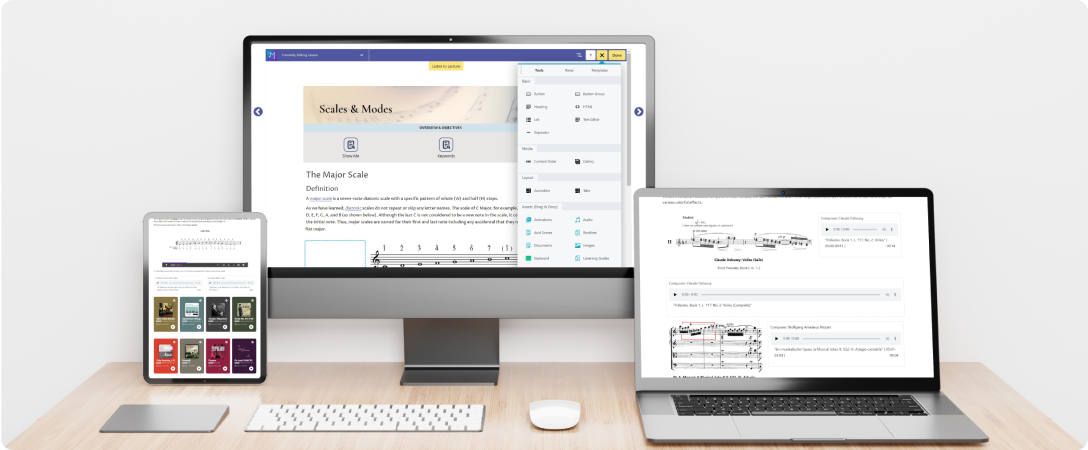
As technology reshapes education, online learning has become increasingly prevalent, offering unprecedented access to resources and opportunities for students worldwide. Music theory lends itself well to online instruction, with a wealth of digital tools and platforms available to enhance learning.
In this article, we'll explore three great ideas for online music theory lessons that leverage the power of technology to engage students and foster musical proficiency.

Interactive Multimedia Modules:
Students appreciate feedback that is specific to them and their work. It is important to provide feedback that specifically refers to and responds to what students submitted rather than using only comments copied and pasted from a feedback bank that could generally apply to any student.
Platforms like OnMusic Companion provide robust tools for building multimedia-rich courses. Break down complex topics such as harmony, rhythm, and notation into bite-sized modules, each focusing on a specific aspect of music theory. Embed videos demonstrating chord progressions, rhythmic patterns, or sight-reading exercises, accompanied by interactive quizzes to reinforce learning. Furthermore, encourage student participation through discussion forums or virtual classrooms where they can ask questions, share insights, and collaborate with peers. By embracing multimedia and interactivity, online music theory lessons can transcend the limitations of traditional instruction, offering a more immersive and engaging learning experience.


Virtual Music Labs:
Bring the laboratory experience to the virtual realm with interactive music labs that allow students to explore theoretical concepts through experimentation and discovery. Utilize virtual instruments, digital audio workstations (DAWs), and music notation software to create hands-on learning environments where students can apply theoretical knowledge in practical contexts. For example, introduce students to chord progressions by having them construct and analyze chords using virtual piano keyboards or guitar fretboards.
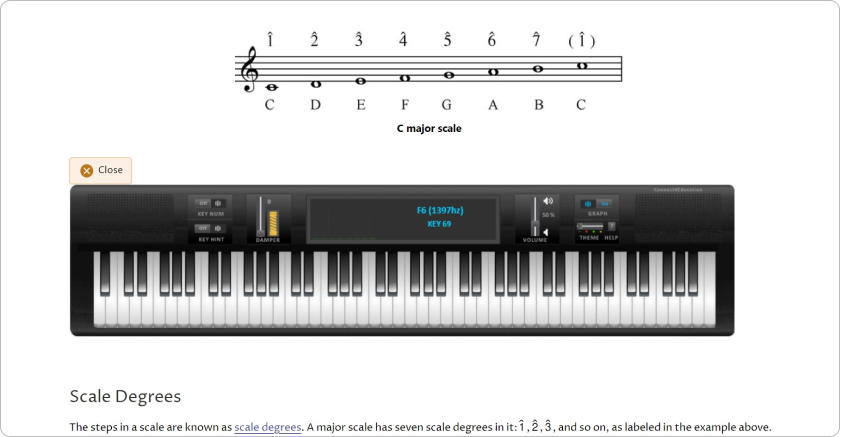
Explore rhythmic concepts through interactive drum machines or rhythm notation software, enabling students to create and manipulate rhythms in real-time. Additionally, use DAWs to compose, arrange, and produce original music compositions, providing students with opportunities to apply theory in creative ways.
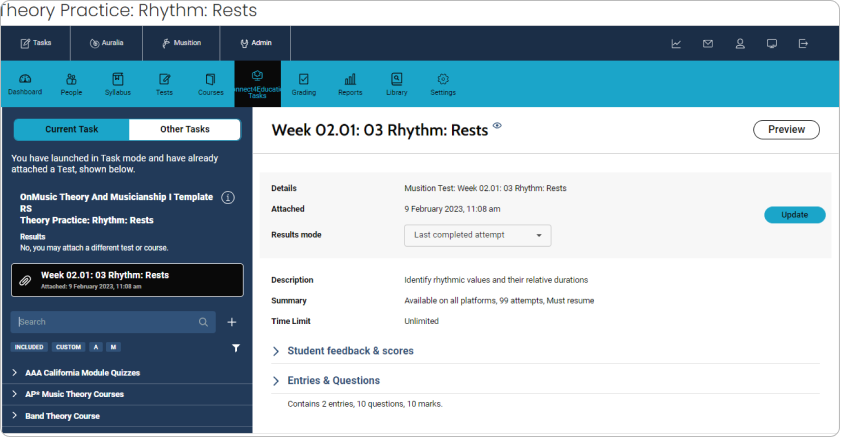
Virtual music labs not only facilitate active learning but also cater to different learning styles and preferences. Whether visual, auditory, or kinesthetic, students can engage with theoretical concepts in ways that resonate with their individual strengths and interests.

Collaborative Online Projects:
Harness the power of technology to foster collaboration and community among students in online music theory lessons.
Assign collaborative projects that encourage teamwork, creativity, and peer feedback, promoting a sense of camaraderie and shared learning experiences. For instance, divide students into small groups and task them with analyzing a piece of music collaboratively.
Assign collaborative projects that encourage teamwork, creativity, and peer feedback, promoting a sense of camaraderie and shared learning experiences. For instance, divide students into small groups and task them with analyzing a piece of music collaboratively. Provide guidelines for identifying key signatures, chord progressions, and formal structures, and encourage students to discuss their findings and interpretations with their peers. Alternatively, challenge students to compose original music compositions together, with each group member contributing ideas and insights based on their understanding of music theory.
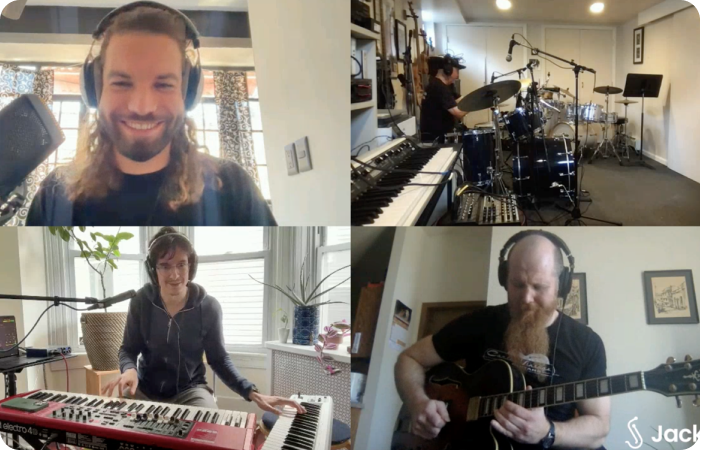
Incorporate video conferencing platforms like C4EStudio for low latency virtual rehearsals, performances, and feedback sessions, allowing students to connect and interact in real-time.
Conclusion
OnMusic Companion offers online music theory lessons with endless possibilities for innovation and creativity, empowering students to explore, learn, and collaborate in ways that transcend traditional boundaries. By embracing interactive multimedia modules, virtual music labs, and collaborative online projects, educators can create dynamic and engaging learning experiences that inspire musical growth and proficiency. As technology continues to evolve, so too will the potential for online music theory education, ensuring that students have access to the tools and resources they need to unlock their musical potential.
Top Blogs










Related Success Stories